The Puree Stage After Bariatric Surgery: Lunch, Dinner, 11 Snacks and the Golden Rules of the Meal
Important, read first: this article offers general information about eating after bariatric surgery. It does not replace the advice of your doctor or the team following you. Every patient has their own rules, set by their own team. If anything here differs from what your team recommended, your team’s recommendation is the one that counts.
The puree stage starts on day 15 after surgery and lasts two weeks. Lunch and dinner follow one simple rule that holds for the whole stage: one single dish per meal.
What follows is an example of a plan for lunch, dinner and snacks: how the first course works, seven second-course ideas with recipes, eleven snacks, and the rules that make a meal go well. Medical teams have different plans, and your own team’s plan is the one that counts for you. The daily schedule and breakfast are in the companion article, The Puree Stage After Bariatric Surgery: A Meal Schedule and 7 Breakfast Ideas.
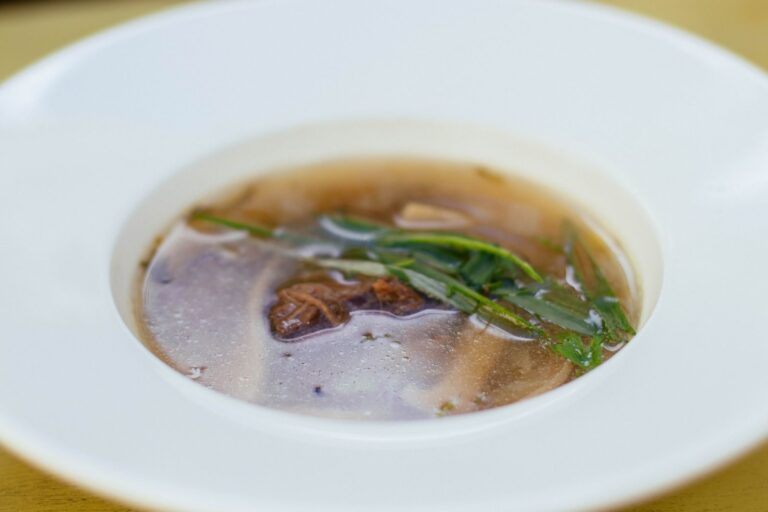
The first course: cream soup
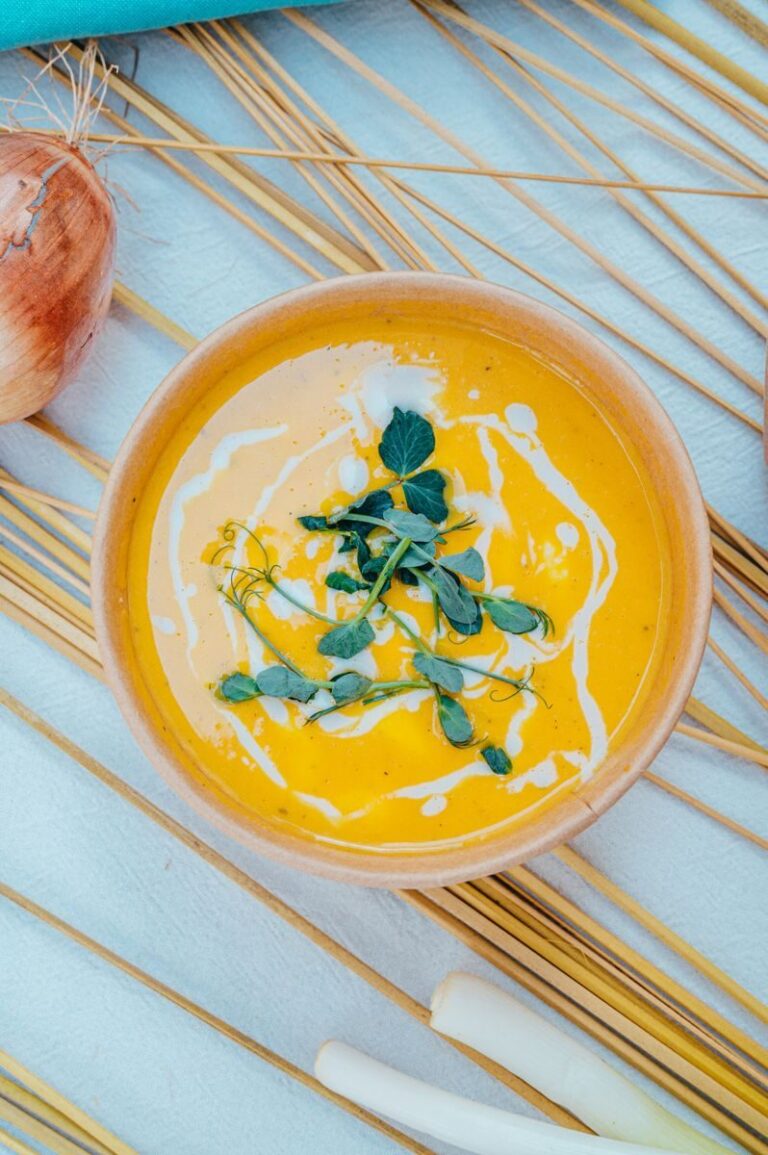
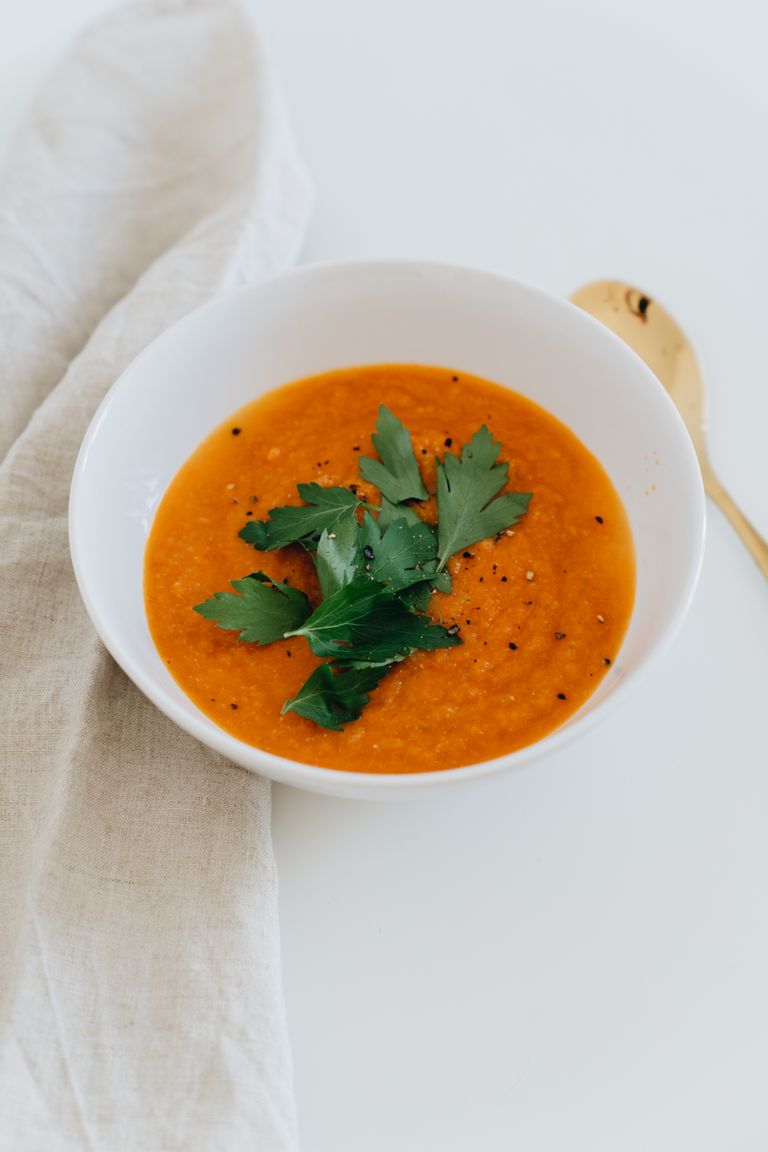
Any meat and vegetable soup can be turned into a cream soup in the blender. The first course can be chosen for lunch and for dinner alike, and days without a first course are just as fine. One example: dumpling soup, with the dumpling crumbled with a fork, a cube of about 25 g of finely minced meat, and a little soup to thin it out.
A few things are avoided with the first course: vinegar, borscht, lemon, cabbage brine and anything spicy. If you want the soup slightly more sour, only tomato broth can be used. Raw fruit and raw vegetables are off limits at this stage. Greek yogurt 2% takes the place of sour cream.
The frozen chicken soup trick
For busy days, a classic chicken soup can be made once and used as a base. From it, small portions of at most 200 ml are frozen, with meat and possibly boiled vegetables inside. The portions are defrosted and paired with other vegetables, a cauliflower floret or a mushroom, and the same base turns into different cream soups. One pot on a Sunday covers several lunches in the week.
The second course: 7 ideas
All the ideas below are eaten blended smooth, in portions of at most 80 g, weighed before the meal:
- Sautéed livers with soft polenta. Half a small onion is cut fine, and the aromatic herbs and a little broth or soup are prepared. Half a teaspoon of oil goes into the cold pan, then the livers and a little salt. The pan goes on low heat, 1-2 tablespoons of soup or broth and the herbs are added, with care: no pepper and no other spicy condiment. It cooks covered, so it steams. It is eaten with soft polenta, and the liver is mashed fine in the sauce left behind.
- Meatballs marinated in reduced tomato sauce. 500 g lean pork pulp, or any lean minced meat, one small zucchini finely grated and squeezed, 1-2 garlic cloves well crushed, and 2 eggs. They are mixed and shaped into medium meatballs, so they stay juicy. For the sauce: a small finely chopped onion and 1-3 finely chopped garlic cloves are steamed in half a teaspoon of oil and 2 tablespoons of water or broth, then a can of chopped tomatoes is added, a bay leaf if you like, and a cup of tomato broth. The sauce is left to boil a little, until it starts to thicken. The meatballs go into the sauce, covered, and are left to simmer for at least 40 minutes. At the end, basil or oregano goes in, to taste.
- Fish baked in baking paper. The fish is seasoned with salt and greens and placed on baking paper greased with a little olive oil. Two garlic cloves in their skin, fine strips of vegetables or cauliflower florets can be added. The paper is folded so air stays inside. It bakes for at least 30 minutes. The garlic is taken out, made into a paste and mixed with yogurt, as a sauce over the fish. It can be eaten with polenta or vegetable puree.
- Soft polenta with cheese and Greek yogurt 2%. Plain yogurt 3% works instead of the Greek yogurt.
- Avocado paste. Avocado, sweet cottage cheese, parsley and a little salt, blended together.
- Baked potato stuffed with cheese and ham. A medium potato, about the size of an egg, is baked halfway in the oven. It is taken out, cut lengthwise and filled with a mix of sweet cottage cheese and finely chopped ham, dill if you like. A little light kashkaval is grated on top, and it goes back in the oven until soft.
- Chicken stew with vegetables. The vegetables are chopped or grated, half a teaspoon of oil and 2-3 tablespoons of water go in, salt and aromatic condiments, and the pot goes on the heat. When the vegetables soften, the meat is added, cut into small cubes, so it stays as juicy as possible. Tomato broth or tomato paste can be added. It is eaten with vegetable puree, polenta, or just with the sauce the vegetables make. The meat is minced very fine.
11 snacks
Snacks fill the gaps between the main meals, 3 hours away from them. All of them fit the texture of the stage and the portion of at most 80 g:
- Boiled fruit from compote, mashed fine with a fork.
- Fruit puree from compote, mixed with sweet cottage cheese or Greek yogurt.
- Cottage cheese.
- Greek yogurt 2% or plain yogurt up to 3.5%.
- Banana.
- Banana with sweet cottage cheese.
- Baked apple stuffed with cheese: the core is scooped out and filled with a cheese mix and 2-3 finely chopped raisins. It bakes in the oven, the skin comes off, and a very good puree is what you get.
- Baked pear.
- Baked pumpkin.
- Banana and egg pancakes, with frozen banana. The ratio is 1 banana to 1 egg. The banana goes into the blender with the egg into a creamy mix. The pancakes are made in a non-stick pan, ideally 7-8 cm across. Fruit puree from compote or Greek yogurt 2% can go with them.
- Fruit ice cream: 1 frozen banana goes into the blender with frozen red fruit, about 1-2 tablespoons. The mix is blended with Greek yogurt, about 200-300 g, and finely chopped mint leaves if you like. It goes into the freezer.
The golden rules of the meal
The rules below hold for the whole stage, and they make the difference between a calm meal and one that ends badly:
- Eat slowly. Use baby teaspoons, filled not even halfway. Best is about a third of a teaspoon. Never a full teaspoon in your mouth.
- A main meal takes at least 20 minutes, even when you eat pureed food. Sit down and eat slowly.
- No water for 30 minutes before a meal and 30 minutes after a meal. Liquids are drunk between meals, not with them.
- No sugar.
- At least 2 litres of liquids a day.
A written plan for the puree stage
- The Stages Bundle: Liquid, Puree, Soft Food (Etsy, €11.99): a 14-day liquid plan, a 14-day puree plan and a 7-day soft food plan. Three PDFs, 20 pages, ready to print at home.
https://www.etsy.com/listing/4613851234/ - Meal Prep After Bariatric Surgery (Etsy, €5.99): the basics of meal prep after surgery, so you cook once and eat well all week.
https://www.etsy.com/listing/4615429107/ - First 30 Days After Bariatric Surgery (Etsy, €6.99): a calm, day-by-day plan for the first month: week-by-week guidance, the six daily habits, common stumbling blocks and a 30-day checklist. 13 printable A4 pages.
https://www.etsy.com/listing/4611056862/
Note: the products above are educational materials, for organising a daily routine. They are not medical devices and they do not replace the instructions of your doctor or your bariatric team.
The daily schedule and the 7 breakfast ideas are in the companion article, The Puree Stage After Bariatric Surgery: A Meal Schedule and 7 Breakfast Ideas. How all the stages look, in short, is described in Eating After Bariatric Surgery: The Liquid, Puree and Soft Food Stages.