When to Call Your Surgeon: 8 Warning Signs After Bariatric Surgery

Important, read first: this article offers general information about recovery after bariatric surgery. It does not replace the advice of your doctor or the team following you. Every patient has their own rules, set by their own team. If anything here differs from what your team recommended, your team’s recommendation is the one that counts.
The first weeks after bariatric surgery are when the body heals and when most questions appear. Most recoveries go without problems. Still, a few signs call for a quick phone call to your surgical team, and for some of them the trip to emergency care does not wait for the call.
The list below gathers 8 such signs, with the thresholds from post-op sheets and what guidelines and studies say about each. It is general information. It does not diagnose anything and it does not replace the advice of the team following you. If your team gave you different thresholds or instructions, theirs are the ones that count.
Key takeaways
- At any of the 8 signs below, call your surgical team. Do not wait for it to pass on its own.
- Sudden chest pain, laboured breathing and coughing up blood go straight to emergency care, without calling first.
- The call thresholds from post-op sheets are a pulse above 90-100 beats per minute and a fever above 37.9 °C that persists after paracetamol.
- Complications are rare. A leak after sleeve gastrectomy appeared in 0.5% of patients in a national registry with over 15,000 operations [6], and deep vein thrombosis appears in 1-3% of patients [5].
The 8 signs, at a glance
| Sign | What you notice | What to do |
|---|---|---|
| 1. Pain that does not ease | Pain does not ease with the usual medication, or gets stronger | Call your team |
| 2. Sudden chest pain | Chest pain, laboured breathing, coughing up blood | Emergency care, without delay |
| 3. A fast pulse | Above 90-100 beats per minute, measured at rest | Call your team or go to emergency care |
| 4. Problems at the incision | Bleeding (dressing changed 2-3 times), redness, swelling, foul-smelling discharge | Call your team |
| 5. Repeated nausea and vomiting | You cannot keep fluids down, it does not settle with the usual medication | Call your team |
| 6. Fever that persists | Above 37.9 °C after paracetamol, with chills | Call your team |
| 7. Weakness that keeps you in bed | You cannot get out of bed | Call your team or ask for help to reach emergency care |
| 8. Swelling of one calf | Swollen calf, pain when walking | Call your team or go to emergency care |
The 8 warning signs
1. Pain that does not ease with the usual medication
Pain after surgery fades gradually, as time passes. If the pain does not ease with the usual medication recommended by your team, or if it gets stronger instead of fading, call your surgical team. Persistent abdominal pain is one of the signs that appear most often when a leak develops at the staple line: it was present in 64.4% of patients with a leak in a national registry with 78 cases [6].
For pain, your team tells you what you are allowed to take. After bariatric surgery, non-steroidal anti-inflammatory drugs are usually avoided, and paracetamol is the usual option [1]. Do not change your medication on your own.
2. Chest pain with a sudden onset
Pain in the centre of the chest, or to the right or left of the sternum, that appears suddenly is a warning sign. So are laboured or frequent, jerky, shallow breaths, and coughing up streaks of blood.
These can be signs of a pulmonary embolism, a blood clot that reached the lungs. Pulmonary embolism appears in 0.3-2% of patients after bariatric surgery [5]. At any of these signs, go to emergency care without delay.
3. A fast pulse
A fast pulse, with or without palpitations, with a sudden or gradual onset, needs attention. The threshold to watch is a rate above 90-100 beats per minute, measured at rest. Call your surgical team or go to emergency care.
The 90-100 threshold is an early-call threshold, from post-op sheets. In studies, a pulse above 100 beats per minute was significantly associated with leaks [4], and a pulse above 120 beats per minute is considered a strong indicator of a leak [3]. A lower threshold means you call earlier.
4. Problems at the incision
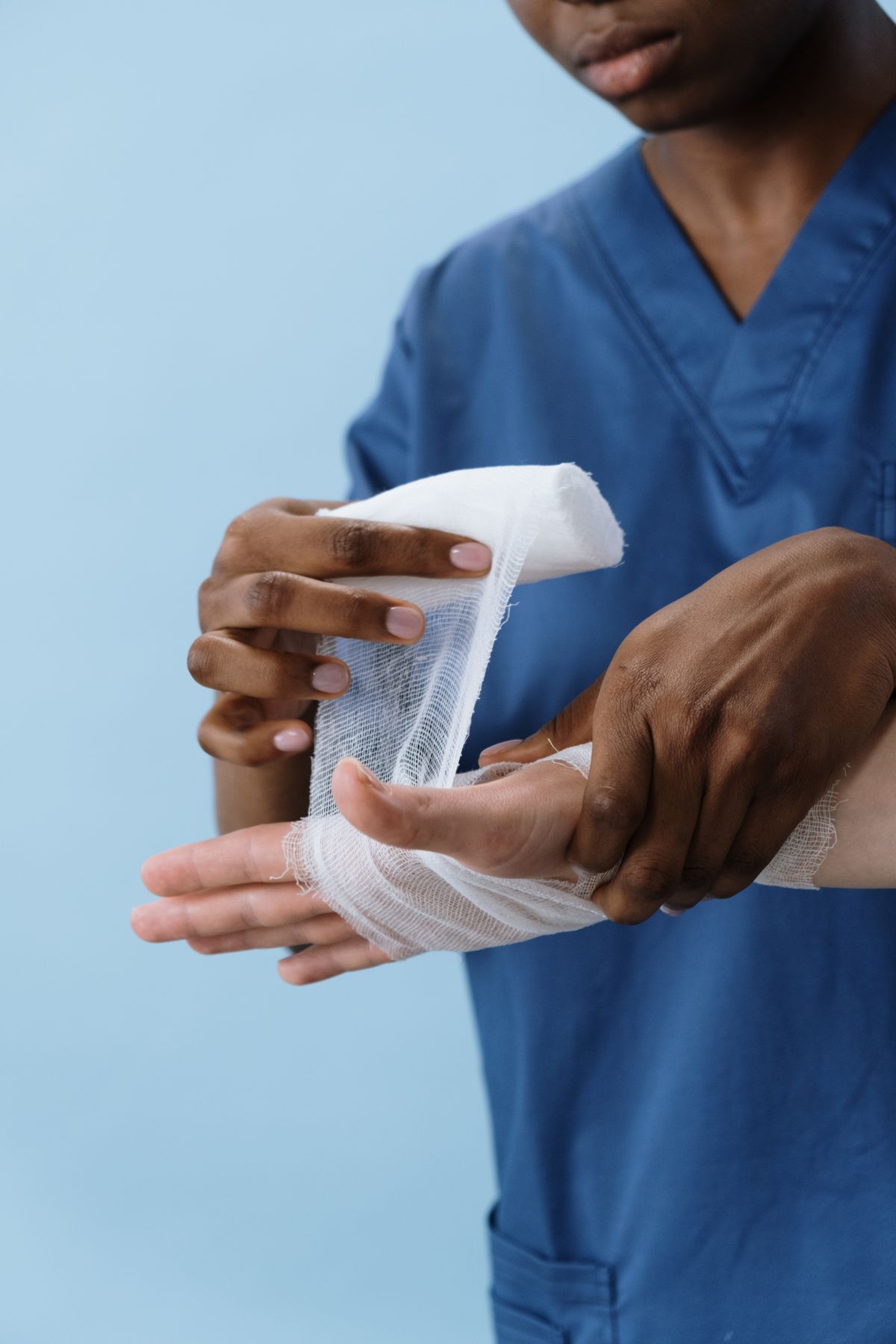
Bleeding at the incision, which asks for the dressing to be changed 2-3 times in a short interval, is a warning sign. So is a scar that swells markedly, with redness, pain and raised local temperature, and foul-smelling discharge with a yellow-green look. Call your surgical team.
One exception is worth knowing: small discharges of liquid that look like liquid fat, with no unpleasant smell, only ask for the dressing to be changed.
5. Repeated nausea and vomiting
Repeated nausea and vomiting, which do not allow fluids to be taken in and show no tendency to settle after the usual medication, are a reason to call your surgical team. Without fluids, dehydration sets in fast, and in the first weeks fluid intake is small anyway. Which liquids are allowed in the first stage and how to drink them is described in the article about the liquid stage.
6. Fever that persists
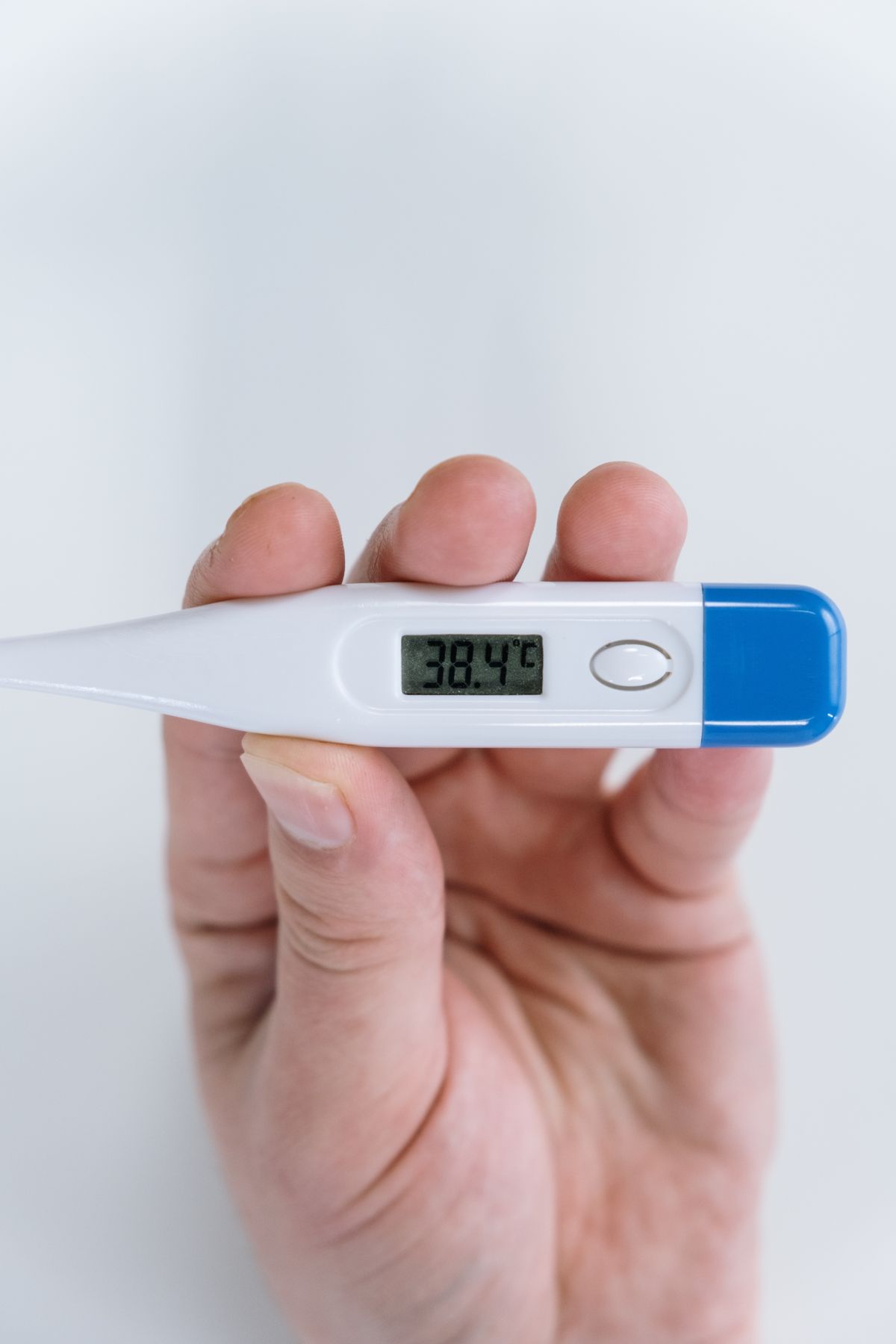
A temperature above 37.9 °C, which persists after paracetamol (acetaminophen), with chills, is a warning sign. Call your surgical team.
Fever is one of the most frequent signs of a leak. In a national registry with 78 cases of leak after sleeve gastrectomy, fever appeared in 86.3% of patients [6]. Fever together with a fast pulse are considered the two most important clinical factors in detecting a leak [3].
7. Weakness that keeps you in bed
A state of weakness, of feeling unwell, that prevents getting out of bed is not part of an ordinary recovery. Call your surgical team or ask for help to reach emergency care. If you are home alone and cannot get up, call your local emergency number.
8. Swelling of one calf
Swelling of one calf, with pain when walking, is a warning sign. It can be the sign of a deep vein thrombosis, a blood clot in a deep vein of the leg.
Thrombosis appears in 1-3% of patients after bariatric surgery [5]. Other signs of thrombosis are local warmth and redness of the calf [5]. Call your surgical team or go to emergency care.
Short, frequent walks are part of recovery
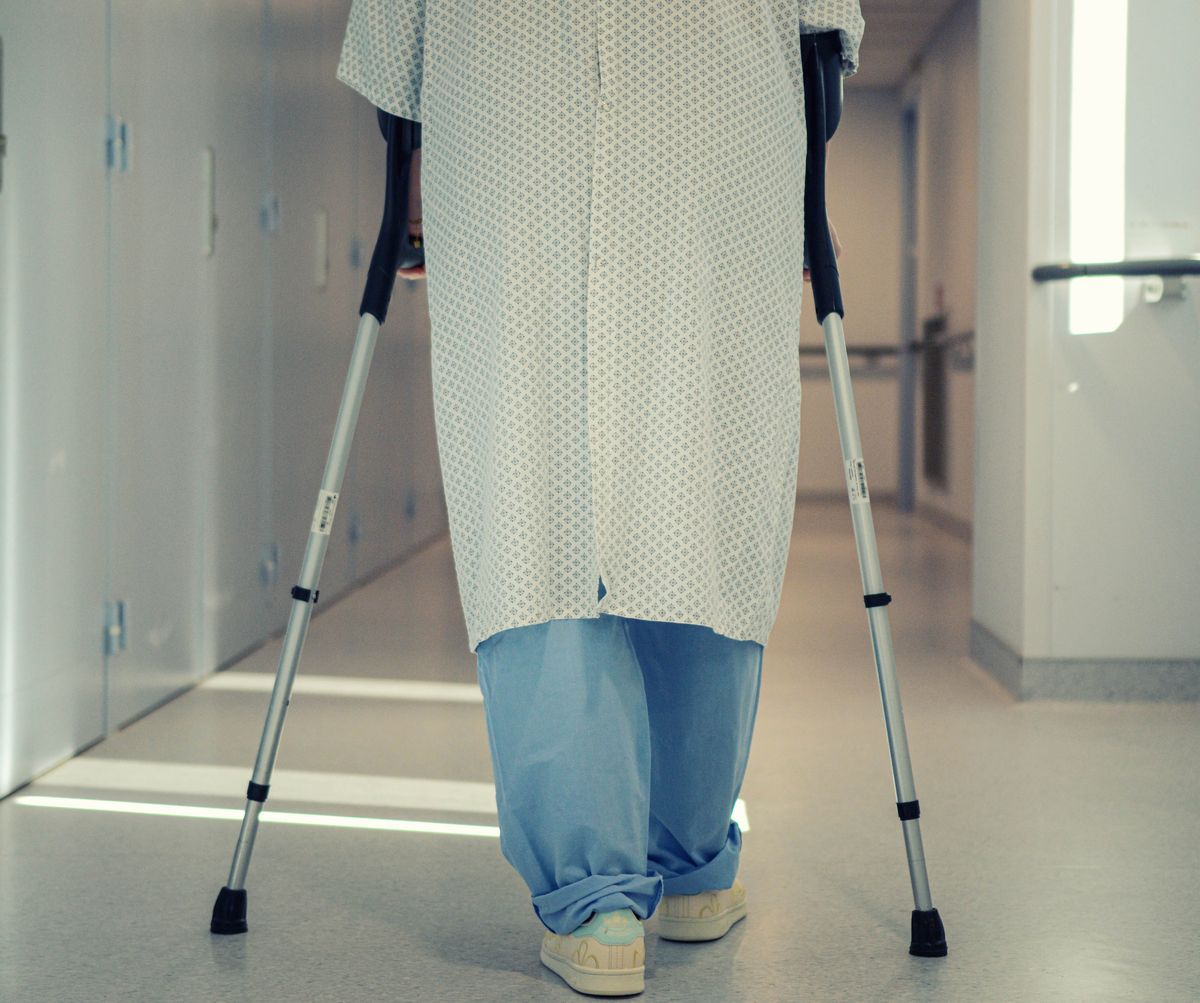
Walking in the first days after surgery helps circulation and lowers the risk of blood clots. Guidelines recommend early mobilisation after bariatric surgery [1]. Short walks of a few minutes, repeated several times a day, are usually enough at the start. Your team tells you how much and how to walk in the first days.
From my experience
I had surgery in 2016, a gastric sleeve. The list above comes from the sheets I was given after my operation. I still have the team’s brochure, ten years later.
What I learned since is that the operation rests on the whole team. The surgeon, the nurses, the dietitian, each has their part. The patient’s part is to call when something feels wrong. Alexandra and I are both bariatric patients, so recovery happened twice in our house.
What to have ready in advance
Keep your team’s contact number within reach, somewhere you can find it fast, even at night. When you call, it helps to be able to say when the sign appeared and how it developed, what temperature or pulse you measured and what medication you took.
Warning signs are not left to pass on their own. If you are unsure whether a sign belongs on the list, call anyway and describe what you feel. Your team decides whether a checkup is needed.
Frequently asked questions
How often do complications appear after bariatric surgery?
Rarely. A leak after sleeve gastrectomy appeared in 0.5% of patients in a national registry with 15,721 operations [6], and other reports cite an incidence of 1-2.4% [6]. Deep vein thrombosis appears in 1-3% of patients, and pulmonary embolism in 0.3-2% [5].
Do the signs appear only in the first days?
No. Leaks can appear early (1-4 days), at a middle interval (5-9 days) or late (10 days and over) [3]. In the national registry, just over half of the leaks (52.8%) appeared in the first 7 days [6]. Watching for the signs is worth keeping up for a few weeks after surgery.
When do I call the team and when do I go straight to emergency care?
Go straight to emergency care for sudden chest pain, laboured breathing, coughing up blood and weakness that keeps you in bed. For the other signs, call your surgical team first, and the team decides whether a checkup or a trip to emergency care is needed.
Can I take anti-inflammatory drugs for pain?
Usually not. After bariatric surgery, non-steroidal anti-inflammatory drugs are avoided, and paracetamol is the usual option [1]. Your team told you what you are allowed to take. If you are unsure, ask them before taking anything new.
What do I say when I call the team?
When the sign appeared, how it developed, what you measured (temperature, pulse), what medication you took and whether you managed to drink fluids. Write these things down before you call, so you do not forget anything.
A guide for the first month
The first month after surgery is easier to get through with a written plan, week by week:
- First 30 Days After Bariatric Surgery (Etsy, €6.99): a calm, day-by-day plan for the first month: week-by-week guidance, the six daily habits, common stumbling blocks and a 30-day checklist. 13 printable A4 pages.
https://www.etsy.com/listing/4611056862/ - The Stages Bundle: Liquid, Puree, Soft Food (Etsy, €11.99): a 14-day liquid plan, a 14-day puree plan and a 7-day soft food plan. Three PDFs, 20 pages, ready to print at home.
https://www.etsy.com/listing/4613851234/
Note: the products above are educational materials, for organising a daily routine. They are not medical devices and they do not replace the instructions of your doctor or your bariatric team.
What to expect week by week in the first month is described in the article about the first 30 days after bariatric surgery.
Sources
- Mechanick JI et al. Clinical Practice Guidelines for the Perioperative Nutrition, Metabolic, and Nonsurgical Support of Patients Undergoing Bariatric Procedures, 2019 Update. Obesity. 2020;28(4):O1-O58. doi:10.1002/oby.22719.
- Kim J et al. ASMBS position statement on prevention, detection, and treatment of gastrointestinal leak after gastric bypass and sleeve gastrectomy. Surg Obes Relat Dis. 2015;11(4):739-748. doi:10.1016/j.soard.2015.05.001.
- Abou Rached A, Basile M, El Masri H. Gastric leaks post sleeve gastrectomy: review. World J Gastroenterol. 2014;20(38):13904-13910. doi:10.3748/wjg.v20.i38.13904.
- Arteaga-González I et al. Usefulness of Clinical Signs and Diagnostic Tests for Suspected Leaks in Bariatric Surgery. Obes Surg. 2015;25(9):1680-1684. doi:10.1007/s11695-015-1589-7.
- IFSO European Chapter. Guidelines for Management of Deep Vein Thrombosis and Pulmonary Embolism Occurring After Metabolic Bariatric Surgery. Obes Surg. 2024;34:1964-1968.
- Li M et al. Management and outcomes of gastric leak after sleeve gastrectomy: results from the 2010-2020 national registry. Chin Med J (Engl). 2023. PMID 37525550; PMCID PMC10431592.
Read the Romanian version: Când să suni chirurgul: 8 semne de alarmă după operația bariatrică