The Liquid Stage After Bariatric Surgery: The 5 Liquids, Explained One by One
Important, read first: this article offers general information about eating after bariatric surgery. It does not replace the advice of your doctor or the team following you. Every patient has their own rules, set by their own team. If anything here differs from what your team recommended, your team’s recommendation is the one that counts.
The first two weeks after bariatric surgery mean liquids only. The stage starts on the first day after surgery and lasts two weeks, while the stomach heals and takes in only what passes easily, with no solid pieces.
What follows is an example of a plan for this stage: five allowed liquids, with clear rules for each. Medical teams have different plans, and your own team’s plan is the one that counts for you.
The 5 liquids, one by one
1. Still water
The base of the whole stage. It is sipped in small amounts through the day, kept within reach, so drinking does not turn into a chore. Water is the liquid you come back to between the others, and it fills most of the 2 litres of the day.
2. Unsweetened tea
Aromatic teas are recommended in particular: drunk for pleasure, without feeling the need to sweeten them. Any sweetener with a glycemic impact is avoided. Zero glycemic index sweeteners are an option only if, at the start, you still cannot give up the sweet taste.
Black tea, green tea and ginger tea are avoided completely at this stage.
3. Fresh compote, strained
Compote is made fresh, from any fruit or combination of fruit, and drunk strained and unsweetened. The fruit is chosen by taste and by what you tolerate, and straining is mandatory: at the liquid stage, no pieces reach the glass.
Shop-bought compotes and home-preserved ones from winter stores are off limits completely. They carry far too much sugar.
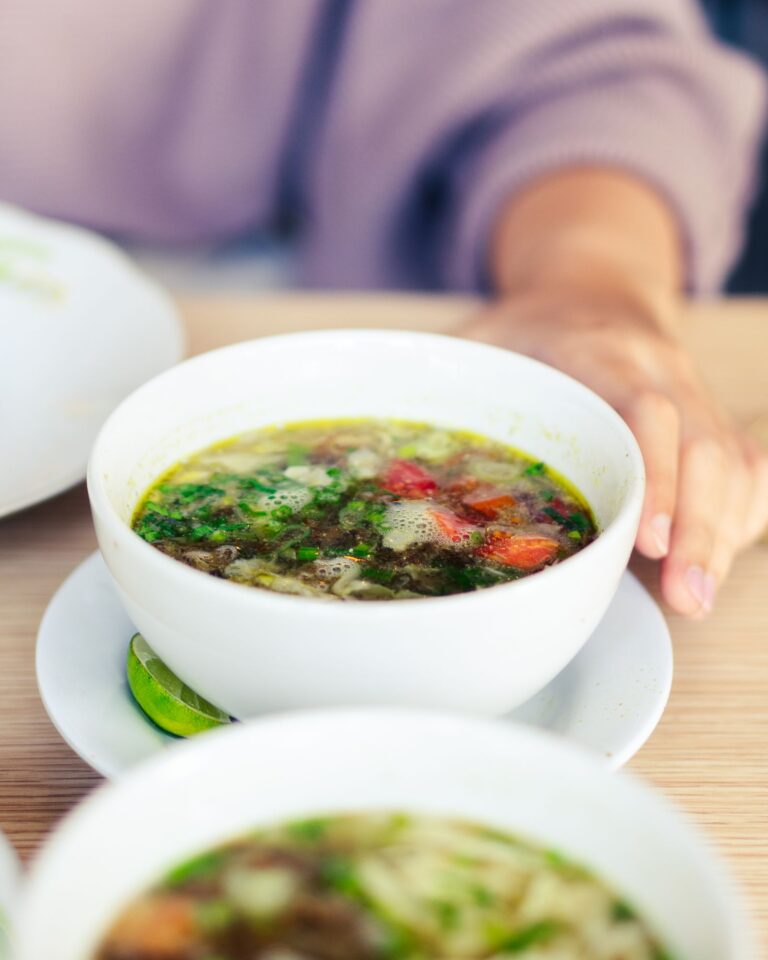
4. Meat and vegetable soup
The meat allowed is chicken, turkey or beef only. No other kind of meat goes into the soup at this stage. The recommended vegetables are carrot, parsley root, parsnip, celery and onion. Potato, kohlrabi and pepper are avoided.
Salt can be used, except where a cardiologist has recommended a low-sodium diet. The soup is drunk strained, like every other liquid of the stage.
5. Plain drinkable yogurt
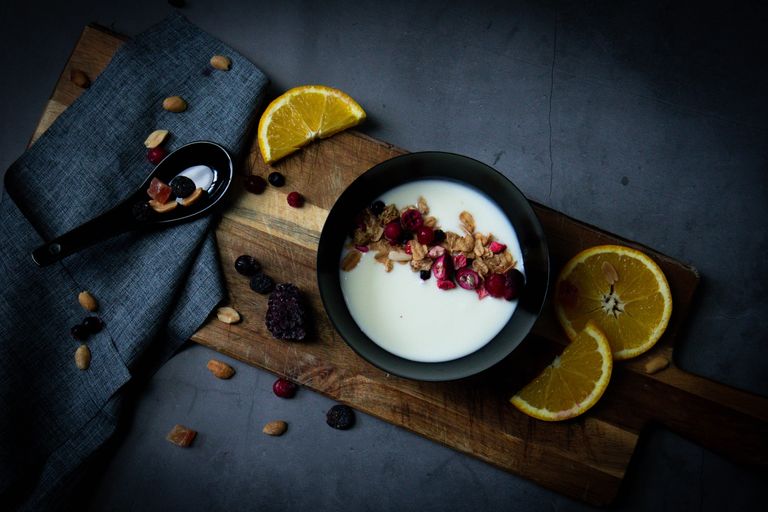
Three conditions matter here, all at once. The yogurt has to be yogurt: sana, kefir, cultured buttermilk and ayran are not part of this stage. It has to be plain: no cereals, no fruit, no probiotic yogurt drinks. And it has to be drinkable: in the liquid period only liquids are consumed, and a yogurt eaten with a spoon is no longer a liquid.
The first days: how the amount of fluid builds up
On the first day after surgery, fluids come back by the teaspoon. The point is tolerance: the stomach relearns how to take in fluid, and the total amount is not limited. Take 2-3 teaspoons of still water, tea or strained soup every 20-30 minutes. On day one, hydration is topped up through IV fluids. From day two, the IVs stop and hydration continues by mouth alone.
How much the stomach holds at once explains why the portions are so small: after surgery, the stomach holds 60-80 ml. A mouthful of fluid is about 30 ml, a tablespoon 10 ml, a teaspoon 5 ml. The spoon, the teaspoon and the small sip are the way to go, rather than swallowing with a full mouth. Drinking straight from the bottle or through a straw can cause gas and discomfort around the stomach, and gas is a common problem after surgery anyway.
The amount builds up step by step. On day two, the minimum is 500 ml for the day, with no upper limit, and it grows from there. In the first days it reaches about 1 litre, and with frequent sips, never more than 30 minutes apart, the day’s total passes 1.5 litres. The target stays at 2 litres a day, reached gradually.
In the first days, the pace is 2-3 tablespoons or sips every 10-20 minutes. It helps to keep track of how much you have drunk, so you can see where you stand against the day’s target. Fullness, the feeling of a full stomach, is the signal to stop, for drinking as for eating: step by step, you relearn to listen to what your stomach tells you.
The day has a meal structure too: at least 5 meals a day, of 60-80 ml each. Three are strained vegetable and meat soups, one is low-fat drinkable yogurt, and one is unsweetened compote juice, from apples or other less sweet fruit. The rest of the day is still water or unsweetened tea.
Two rules hold for the whole stage: hot drinks are avoided, and fizzy drinks of any kind are off limits.
Dehydration sets in when the fluid you drink is not enough. Its signs are dizziness, headache, lethargy, nausea, a coated tongue and darker urine. If you notice them, check first how much you drank that day, and let the team following you know.
How they are drunk through the day
The 5 liquids are drunk in turns, through the course of a day. By the end of the day they should add up to at least 2 litres. Taking turns helps with variety: the same drink all day gets tiring fast, and a day has enough drinking moments for all five.
Small sips, taken slowly, are the basic rule of the stage. Drinking in a hurry is the fastest way to feel uncomfortable, and fullness arrives fast and quietly now.
A written plan for the two weeks
Two weeks of liquids are easier to get through with a plan on paper, instead of deciding from scratch five times a day:
- Full Liquid Diet Plan, 14 Days (Etsy, €4.99): fourteen days planned, five sipping moments a day, a two-week shopping list, a safe list for the drinks that sat well, and a 14-day tracker. Ten printable A4 pages.
- The Stages Bundle: Liquid, Puree, Soft Food (Etsy, €11.99): a 14-day liquid plan, a 14-day puree plan and a 7-day soft food plan. Three PDFs, 20 pages, ready to print at home.
- Protein & Water Tracker (Etsy, €3.99): a daily and weekly tracker for protein and water, with a list of protein foods. A printable 5-page PDF.
Note: the products above are educational materials, for organising a daily routine. They are not medical devices and they do not replace the instructions of your doctor or your bariatric team.
After the two liquid weeks comes the puree stage. How all the stages look, in short, is described in Eating After Bariatric Surgery: The Liquid, Puree and Soft Food Stages.